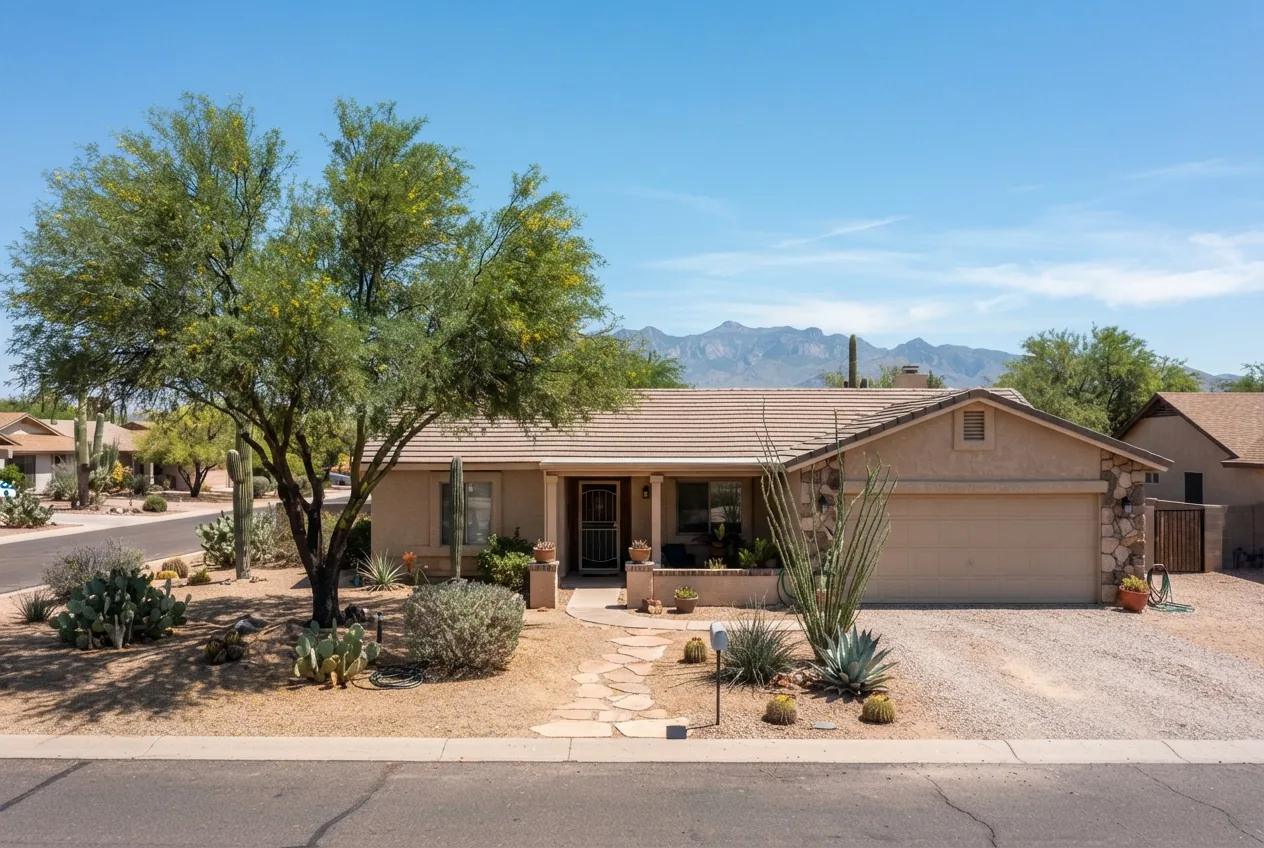
Two houses a mile apart can both have "Tucson, AZ" on the mailbox and still answer to different rulebooks when the roof needs work. One sits inside the City of Tucson. The other sits in unincorporated Pima County. For most small repairs, neither needs a permit. But the line between "no permit" and "permit required" isn't drawn in exactly the same place, and it helps to know which side of the city limits you're on before a roofer starts pulling tiles.
Your Mailing Address Doesn't Tell You Your Jurisdiction
This catches a lot of people off guard. Big parts of Tucson's southwest side, including areas around Drexel Heights and Valencia West, use Tucson mailing addresses and Tucson ZIP codes but are not inside city limits. The same is true in pockets on the northwest and east sides. The post office decides your mailing address. Annexation decides your jurisdiction. They don't always match.
A few quick ways to check:
- Look at your property tax bill. The tax area code and the list of taxing districts usually make it clear whether the City of Tucson is one of them.
- Look up your parcel. Pima County's online parcel and mapping tools show which jurisdiction a property falls in.
- Check who answers 911. If your fire protection comes from a fire district (like Drexel Heights or Northwest Fire) rather than Tucson Fire, that's a strong hint you're in the county. It isn't proof on its own, but it's a good first clue.
Roof Work Inside the City of Tucson
The City's permit exemption guide is fairly specific about roofs. Here's the short version:
- Same-material repair or replacement is exempt. Replacing roofing with the same type, like shingles for shingles or tile for tile, doesn't need a permit, as long as no structural work is involved and the property isn't in a Historic Preservation Zone.
- Structural roof work needs a permit. The City spells this out: replacing sheathing, decking, joists, or trusses counts as structural.
- New roof penetrations need a permit. Adding a skylight, a light tube, or a new vent for plumbing, a kitchen, or the attic requires one.
- Historic and neighborhood preservation zones add a review. If your home is in one, even routine-looking roof work may need special district review.
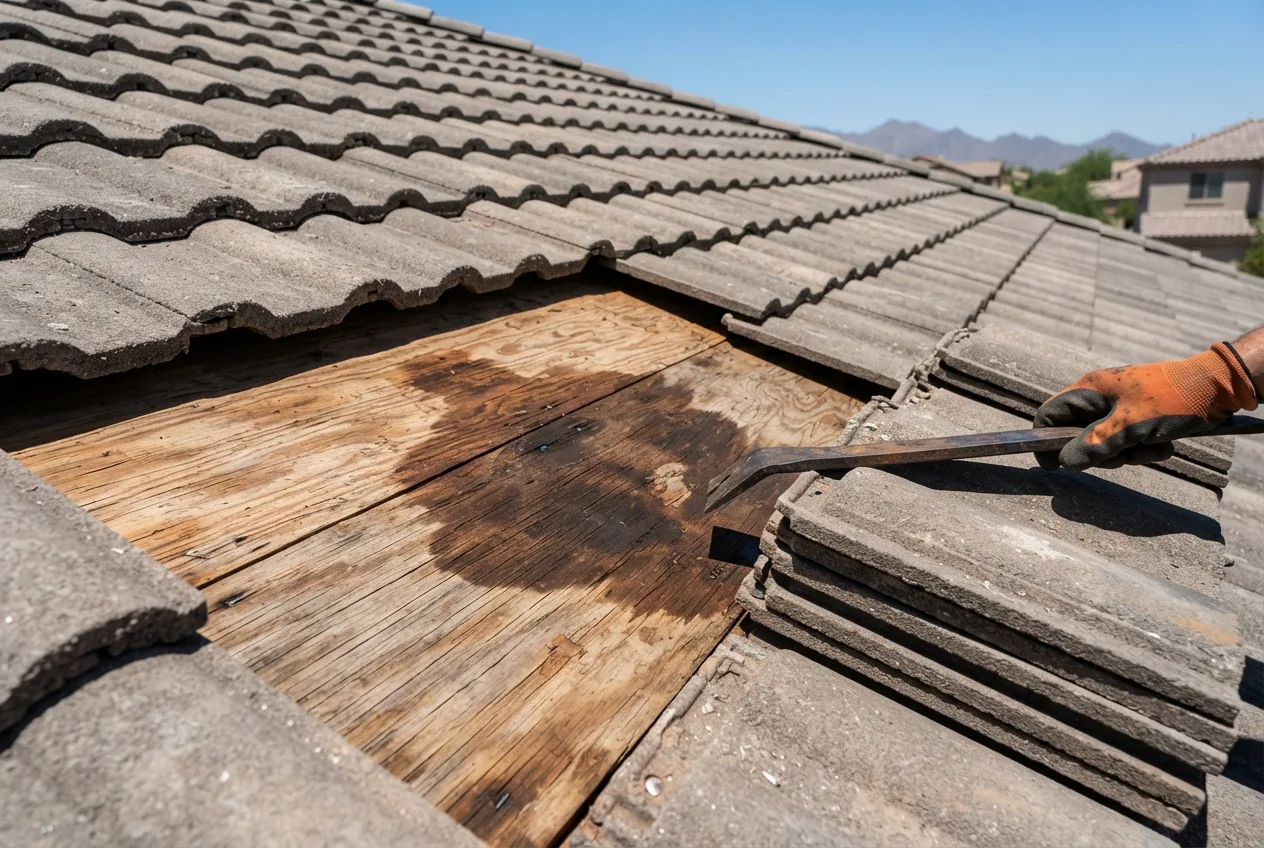
The decking rule is the one that surprises people. A leak that's been going for a while often soaks the plywood under the roof covering. Once a roofer has to cut out and replace those sheets, the job has crossed from surface repair into structural work, at least by the City's definition. A good contractor will tell you that before it happens, not after.
Roof Work in Unincorporated Pima County
Pima County's "Do I need a permit?" page lists two roof items: re-roofing with like materials (tile, shingles, and so on) doesn't need a permit, and structural roof work does. The County notes that its list is illustrative, not complete, so a project that doesn't fit neatly into either line is worth a quick call to Pima County Development Services before work starts.
In practice, most repairs in the county look a lot like most repairs in the city. Replacing a cracked boot seal around a rooftop cooler, resetting slipped tiles, or patching flashing stays on the surface. Framing work doesn't.
Manufactured Homes Are Their Own Category
A lot of unincorporated Pima County is manufactured housing. Pima County's manufactured-home rules mostly cover installing or moving a home, which needs both a County building permit and a State of Arizona installation permit. They don't spell out a simple rule for roof-overs or roof repairs on an existing manufactured home. If you're planning anything beyond a basic repair, like a roof-over, ask the County first. And ask any contractor you're considering whether manufactured-home roofs are something they do regularly, since the construction is different from a site-built house.
What About Oro Valley, Marana, and the Other Towns?
Oro Valley, Marana, Sahuarita, and South Tucson each run their own building departments with their own rules. Don't assume the City of Tucson's exemptions or the County's apply there. A two-minute call to the town's building office settles it.
Questions to Ask Before Anyone Gets on Your Roof
- "Is my house in the city or the county, and does that change anything for this job?" A local roofer should know the difference and not just guess from your address.
- "If you find bad decking, what happens?" You want to hear how they handle it, including whether a permit gets pulled and who pulls it, before the old roof comes off.
- "Are you licensed with the Arizona Registrar of Contractors?" You can look up any contractor's license and complaint history on the Arizona ROC website.
- "Will anything new go through the roof?" A new vent or skylight changes the permit picture inside city limits.
For a street-level example of how this plays out, DC Roofing of Arizona wrote up the homes around Manzanita Plaza at Valencia and Cardinal, which carry Tucson addresses but sit in unincorporated Pima County.
None of this is meant to make a simple repair feel complicated. Most roof repairs in both the city and the county need no permit at all. It just pays to know where the line is, so a repair that turns out to be bigger than expected doesn't turn into a paperwork problem too.